


Published on July 22th 2026
By Harry Covert, magician and mentalist, creator of participatory experiences
How Mentalism Transforms Corporate Networking
Bringing clients, partners or colleagues together in the same room is not enough to create meaningful networking. From the very first minutes, participants often gravitate towards the people they already know: groups begin to form, conversations remain predictable, and those who arrive alone may hesitate to interrupt an established circle.
Yet networking is expected. Guests know they are supposed to meet new people. Paradoxically, this expectation can make conversations feel even more artificial. What is often missing is one simple ingredient: a shared topic and a natural reason to connect.
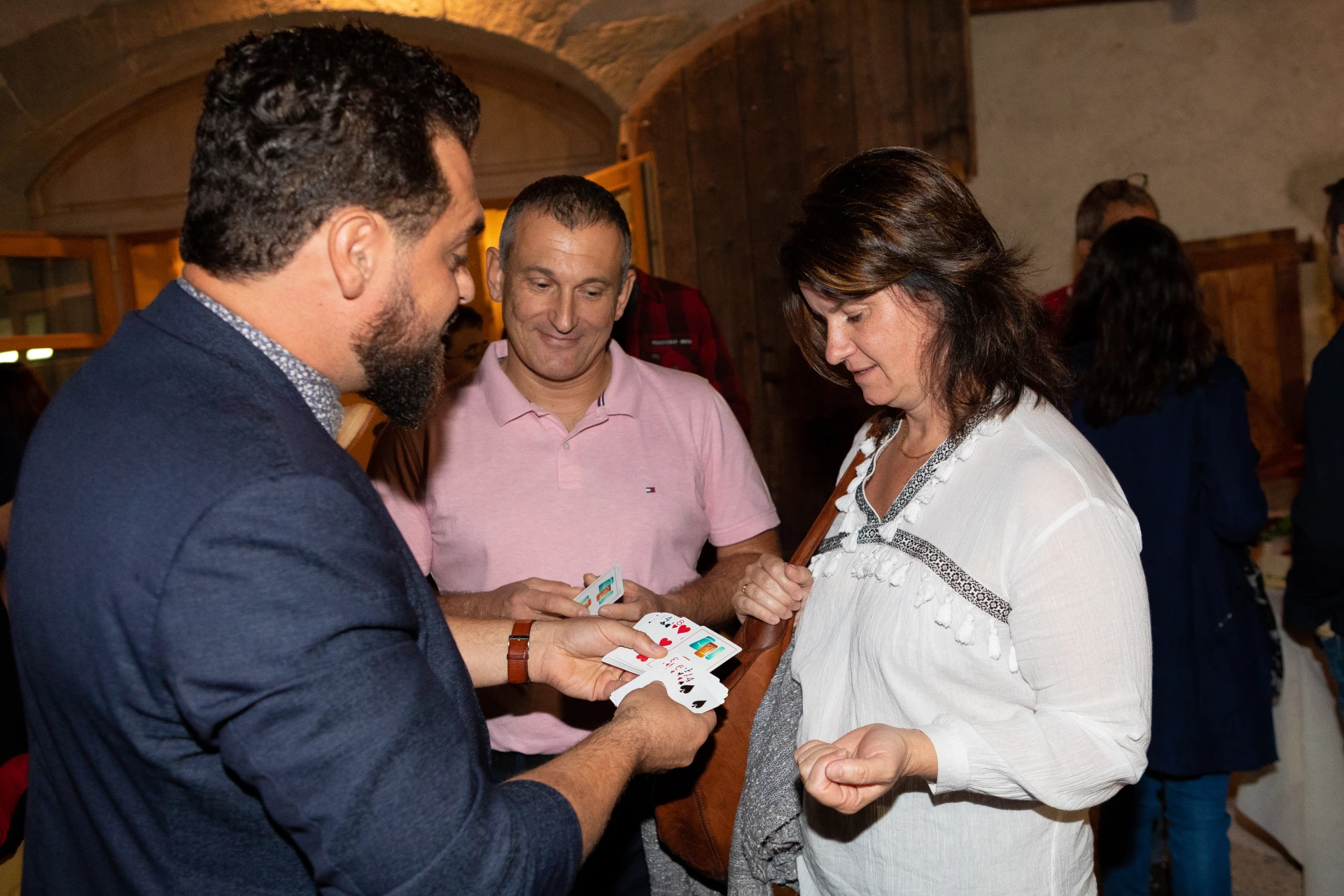
This is precisely where mentalism comes in. An intuition, a prediction or a shared decision creates an experience that several guests live through together. They no longer need to search for a reason to start a conversation: that reason has just happened to them.
Harry Covert does not replace the organiser or the work involved in introducing people. By moving through the heart of the event, he creates situations that make initial conversations easier, more natural and more memorable—corporate networking entertainment designed to support conversation rather than replace it.
Mentalism facilitates networking by creating a shared experience that attracts attention, brings several participants together and immediately gives them something to talk about.
In a nutshell: Mentalism supports networking by giving participants a shared experience to discuss. Guests’ choices, intuitions and reactions create an immediate topic of conversation, make it easier to join groups and reduce the awkwardness of first encounters. Whether used in close-up or as part of a collective sequence, participation should always remain voluntary, seamless and aligned with the objectives of the event.
What Is Mentalism for Networking?
Mentalism for networking involves using experiences based on choice, intuition and perception to create natural interactions between participants at a corporate event.
A Relationship-Building Experience Before It Is a Show
The objective is not simply to surprise. Mentalism should bring several people together around the same moment, create shared attention, give guests an active role, generate a collective reaction and leave them with something to talk about once the experience is over.
A Conversation Starter, Not a Forced Conversation
There is an important difference between a networking instruction, an introduction exercise, a compulsory game and an experience that spontaneously makes people want to talk. The mentalist does not ask participants to exchange business cards artificially or present their work. He creates a situation intriguing enough for conversation to emerge naturally.
An Approach Aligned with Harry Covert’s Positioning
“Your guests become the show” means that their decisions, intuitions and reactions become the material of the experience. Harry Covert remains the guide and director of the moment, but the participants become its true protagonists.
Key takeaway : Mentalism does not replace networking. It reduces the distance between people and gives them an experience strong enough to begin talking without feeling forced.
Why Are First Conversations Often Difficult?
Guests Naturally Gravitate Towards Their Existing Contacts
Participants tend to approach the colleagues they arrived with, members of their team, existing clients, people they have met before or groups whose social codes they already understand. This behaviour does not indicate a lack of openness. It simply reduces social uncertainty.
Joining a Group Can Feel Risky
Interrupting a conversation, not knowing whether a group is open, having no obvious topic, fearing an overly commercial introduction, not knowing the roles of the people present or being unsure how to leave the conversation: each of these obstacles can keep participants within their usual circle.
Overly Structured Networking Formats Can Have the Opposite Effect
Lengthy introductions, timed presentations, artificial games, compulsory group changes, personal questions, competitive challenges or badges overloaded with information can all be relevant in certain situations. However, they are less suited to premium events where freedom and fluidity are priorities.
A Shared Experience Reduces the Social Risk
When a small group is watching an experience, someone from outside the group can gradually move closer, observe before speaking, react without immediately introducing themselves, ask a question about the experience and join the conversation without feeling as though they are interrupting it.
Key takeaway : The main obstacle to networking is not always a lack of willingness. It is often the absence of a simple and legitimate reason to join a conversation that has already begun.
How Does Mentalism Turn Surprise into Conversation?
Guests’ Choices Create a Shared Story
Two people who do not know one another each make a decision. A third person holds on to a prediction. When their choices appear to come together in an impossible way, the revelation belongs as much to the participants as it does to the mentalist.
Those present are immediately left with several questions: Was the choice genuinely free? Did the participants already know each other? When was the prediction written? Did everyone see the same thing?
Attention Flows Between the Participants
In a conventional stage performance, attention is focused mainly on the performer. In a networking experience, guests look at one another, react to each other’s decisions, compare their perceptions, become witnesses to one another and continue the moment after the mentalist has moved away.
Mentalism Creates a Neutral and Accessible Topic
The topic is not connected to someone’s role, hierarchical position, industry or commercial performance. An executive, a new employee, a client and a partner can all share the same curiosity.
The Mentalist Must Also Know When to Step Away
Knowing when to intervene, bringing the experience to a clear conclusion, avoiding holding the group unnecessarily, allowing guests to form their own theories and moving on to another group once conversation has begun: this skill distinguishes a professional performance from entertainment that imposes itself on the event.
During a client event, four participants who barely know one another share an experience based on their decisions. When Harry moves away, they continue comparing their versions of what happened. The performance has ended, but the conversation it created continues.
A mentalism experience within a professional network illustrates this dynamic particularly well: the members may already know one another, but the experience gives them something entirely new to share.
Key takeaway : Mentalism supports networking when the surprise does not remain centred on the performer, but becomes a story that participants try to understand and retell together.
Which Mentalism Format Should You Choose for Your Event?
Close-Up Mentalism During a Cocktail Reception
This format is suited to client events, openings, networking cocktails, partner receptions, business dinners and VIP events. It allows the mentalist to perform for small groups without requiring a stage, while moving freely through the venue, presenting short experiences, adapting to the pace of the service and creating immediate conversations after each sequence.
Close-Up Magic Enhanced with Mentalism
This format combines objects, cards, choices, predictions, intuition and interactions between several guests. It is particularly effective when the audience is not yet familiar with mentalism or when the event requires greater visual variety. You can also discover corporate close-up magic to explore this format in more detail.
A Collective Sequence During a Convention
A shared performance can take place after a series of conferences, before an awards ceremony, as an opening or closing sequence, to re-engage attention or to bring several groups together around the same memory.
Networking continues after the show as guests discuss the collective decision or the final revelation.
A Recurring Thread Throughout the Event
Harry Covert can perform at several moments : during the welcome, the cocktail reception, transitions between speakers, dinner or a final collective sequence, to avoid concentrating the entire impact within a single performance.
Mentalism at a Trade Show
Mentalism can attract attention without aggressive solicitation, create an initial interaction, keep visitors engaged and make it easier for the sales team to take over the conversation. A message or product feature can also be integrated subtly.
It should not be presented as a guarantee of leads, but as a way of facilitating initial contact.
Key takeaway: The format should be chosen according to the relationship-building objective. Close-up mentalism facilitates encounters within small groups, while a collective sequence creates a shared reference for all participants.
How Can Mentalism Be Integrated Without Interrupting the Networking?
Define the Purpose of the Performance
Before choosing the experiences, it is important to establish whether the mentalism should break the ice, bring different groups together, make waiting more enjoyable, re-engage attention, introduce a speech, highlight a message or create a collective conclusion.
Identify the Right Moments
Suitable moments include the arrival of the first guests, the central part of the cocktail reception, transitions between two sequences, the period following a speech, the build-up to an important reveal or certain transitions during dinner.
Conversely, speeches, the serving of a course, product demonstrations, strategic conversations that are already under way, changes of room or excessive noise levels are moments to avoid.
Coordinate with the Other Event Professionals
A preliminary discussion with the event agency, venue manager, production team, caterer, master of ceremonies, marketing teams and sales managers allows the mentalist to understand the event schedule, timings, circulation constraints, guests requiring particular consideration, important announcements, languages spoken and the expected level of formality.
Preserve Existing Conversations
Harry Covert should not interrupt a group simply because he is available. He observes whether the conversation is open, whether participants are receptive, whether someone is looking for a way to join the group, whether the performance would genuinely add something or whether the group should be left undisturbed.
Key takeaway : Mentalism supports networking when it takes place at the right time and in the right setting. It should create an opportunity for connection, never distract guests from a conversation that is already valuable.
How Can Guests Participate Without Feeling Uncomfortable?
Offer Several Levels of Participation
A guest may simply observe, move closer to the group, respond from where they are standing or sitting, make a choice, lend an object, participate with another person or contribute to a collective experience.
There is no need to step onto a stage to become part of the moment.
Keep Participation Voluntary
A premium performance excludes insistence, mockery, humiliation, deliberately setting someone up to fail, intrusive questions, the use of sensitive information, jokes based on hierarchy and the exposure of a reserved participant.
Adapt the Interaction to the Audience
The mentalist must take into account the level of formality, hierarchical relationships, cultural differences, languages spoken, the participants’ ages, accessibility, alcohol consumption and the presence of VIP clients or senior executives.
Make Every Participant Look Good
The revelation should allow the guest to contribute to the success of the experience, remain in control of their level of participation, never appear to be the victim of the performance, return naturally to their conversation and retain a positive memory of the moment.
Respectful participation gives guests a genuine role while leaving them free to observe, take part or decline without having to justify themselves or being placed in an uncomfortable situation. This principle is explored further in Why Your Guests Become the Show.
Key takeaway : Mentalism can only facilitate relationships when participants feel respected. The guest’s comfort is more important than the effect itself or the number of people involved.
How Can the Experience Be Personalised and Its Relationship-Building Impact Measured?
Personalise Without Turning the Experience into Advertising
The theme of the event, a company value, a product, a story, a key figure, the venue, an internal expression or a closing message can be incorporated into a prediction or revelation.
This personalisation should remain subtle. An overly promotional sequence may be perceived as yet another commercial presentation.
Design the Performance Around the Guests
The brief should establish who will be attending, which people already know one another, which groups the organiser would like to bring together, which sensitivities should be respected, the desired level of interaction and the emotion guests should retain after the event.
Observe Concrete Indicators
Rather than promising a precise number of new contacts, it is more useful to observe the number of groups reached, the diversity of participants brought together, the conversations that continue after the performance, spontaneous feedback, mentions in the post-event survey, moments referred to in thank-you messages, photographs and content shared, and the satisfaction of the organising team.
Continue the Conversation
Afterwards, the organiser can refer to one of the experiences in a thank-you message, share an authorised photograph, reuse a phrase or revelation, publish a case study or connect the moment to the overall theme of the event.
Key takeaway : Personalisation gives the mentalism experience meaning. Evaluation then makes it possible to determine whether the performance genuinely facilitated new encounters and created a lasting topic of conversation.
Why Use Mentalism to Support Networking?
Professional conversations do not arise simply because a cocktail reception, name badges and business cards have been provided. They begin when participants find a natural reason to approach one another and something they genuinely want to share.
Mentalism makes it easier to join groups, creates a shared topic, brings different profiles together, reduces the awkwardness of the first few minutes, produces a shared emotion and extends conversations long after the performance has ended.
Harry Covert’s role is not to replace professional conversations, but to create the conditions that make them easier. Through close-up magic and participatory mentalism, whether during a cocktail reception (encouraging conversations during a professional cocktail reception) or as part of an event designed as a whole (the ingredients of a memorable corporate event), he gives guests an experience built around their own decisions.
Participants are not simply watching a performer. They observe their neighbours’ choices, react together and create a shared story. Your guests become the show, and the show becomes their first topic of conversation.
FAQ — Your Questions About Mentalism and Networking
Can Mentalism Really Facilitate Networking?
Yes, because it gives participants a shared experience to discuss. Guests do not need to immediately find a professional topic or introduce their work. They begin by reacting to what they have just experienced, and the conversation can then naturally move towards their roles, projects or shared interests.
What Is the Difference Between Mentalism and a Traditional Icebreaker?
A traditional icebreaker often relies on an instruction or an exercise that every participant is expected to follow. Mentalism can remain more flexible: some guests participate, others observe, and everyone chooses their own level of involvement.
The conversation begins with a shared experience rather than an obligation to introduce oneself.
Is Close-Up Mentalism or a Show Better Suited to Networking?
Close-up mentalism is particularly well suited to cocktail receptions and conversations within small groups. The mentalist moves among the guests and creates several points of connection.
A collective show is more suitable when the objective is to bring the entire audience together around a shared highlight. Both formats can be combined during the same event.
When Should a Mentalist Perform?
Mentalism can be incorporated during the welcome, the cocktail reception, a transition or after a speech. The timing depends on the objective: if the aim is to facilitate the first conversations, it is preferable to begin relatively early.
However, the performance should pause during speeches, important presentations and professional conversations that are already under way.
Do All Guests Have to Participate?
No. Some guests may make a choice or lend an object, while others may prefer simply to watch. A professional performance should offer several levels of involvement and immediately respect anyone who chooses not to participate.
The quality of the entertainment does not depend on how many people are placed in the spotlight, but on how comfortable the group feels as a whole.
Is Mentalism Suitable for Executives or VIP Clients?
Yes, provided that the performance remains elegant, discreet and respectful. The mentalist should avoid sensitive information, jokes based on hierarchy and situations that could make a participant uncomfortable.
Short, personalised experiences performed for small groups are particularly well suited to executive cocktail receptions and VIP events.
Can Mentalism Be Personalised Around a Company?
Yes. A value, product, theme, story or message can be incorporated into a prediction or revelation.
However, this personalisation should remain subtle. The experience must retain its artistic dimension and should not feel like an additional commercial presentation.
How Much Time Should Be Allowed for Networking Entertainment?
The duration depends on the number of guests, the layout of the venue and the programme. The performer should have enough time to meet several groups without mechanically repeating the same experiences.
For a collective sequence, the duration will also depend on the time allocated to the other speeches and entertainment.
How Can the Impact of Mentalism on Networking Be Measured?
It is possible to observe the diversity of the groups brought together, the conversations that continue after the performance, spontaneous reactions and feedback collected after the event.
These concrete indicators are more appropriate than promising a precise number of contacts or leads directly attributable to the entertainment.
What If Mentalism Became the First Connection Between Your Guests?
Networking cannot be forced. It begins when an experience gives participants a natural reason to move closer, react together and continue the conversation.
Harry Covert designs close-up magic and mentalism performances for professional cocktail receptions, client events, conventions, seminars, trade shows and premium events. Each performance is prepared according to your audience, objectives, the rhythm of the event and the desired level of participation. If your event is taking place in the region, the article about networking in Annecy explores the local context in greater detail.
Whether in small groups or during a collective highlight, your guests’ choices, intuitions and reactions become the material of the experience. They no longer simply watch the show: they become part of it.


